.png)



.svg)


How to hire developers in Poland: hiring channels, costs and timelines
Sharing channels, tactics, and a 10-Day case study.
.svg)
Hiring developers in Poland comes down to three questions: which contract to offer, what it costs and how long it takes. We're the recruitment team at On The Spot Development, and below is what we see in practice, including the channels that work and a 10-day hire. If you’d rather have us run the search, see how we hire developers in Poland for your team.

Poland has become the tech heart of Central and Eastern Europe:
- 650,000 IT specialists
- half a million developers
- over 60,000 tech companies
Talent competition is fierce here, and sometimes you really have to dance with a tambourine to get results. Here’s how we do it.
A vacancy lands in our inbox. What happens next?
When a startup needs to build an R&D team, the process doesn’t drag on. As soon as we get a request, we start sourcing right away — and on average, customers see the first candidates within 72 hours.
We split all our efforts into two types.
1. The base
This is the backbone of our hiring engine: the channels we’ve tested, broken, rebuilt, and now trust with our eyes closed.
- LinkedIn job openings. Our go-to base. We try to publish roles as soon as a position opens and use the free posting options.
- LinkedIn organic posts. We create posts that usually get 2,000–4,000 views. It’s the routine work we never skip, and somehow it reliably brings in candidates that make up a solid part of the pipeline.
- LinkedIn outreach. We reach out to targeted candidates and nurture conversations.
Overall, Linkedin is our unglamorous workhorse where 8 out of 10 hires happen.
- Internal newsletter. People subscribe to our newsletter themselves, usually after hearing about our activities and events. Within this database, we have 6,000+ active candidates, and emails see 60–78% open rates. On top of that, we also send campaigns to our broader 60,000+ contacts stored in Lever ATS.
- Referrals. We actively ask our network and past hires for recommendations, and depending on the quarter, 3–15% of hires come from someone saying, “I know a good person for this role”.
- Local tech communities. Our network comprises about 230 communities, including around 50 with whom we have active, ongoing collaboration. They range from tiny 100-person chats to huge 80,000-member groups, where we post vacancies iteratively and nurture relationships with engineers.
2. The accelerator
When a role is hard to fill, seems impossible to staff quickly, or when we know there are big upcoming plans to scale the team, we pull out the heavy artillery:
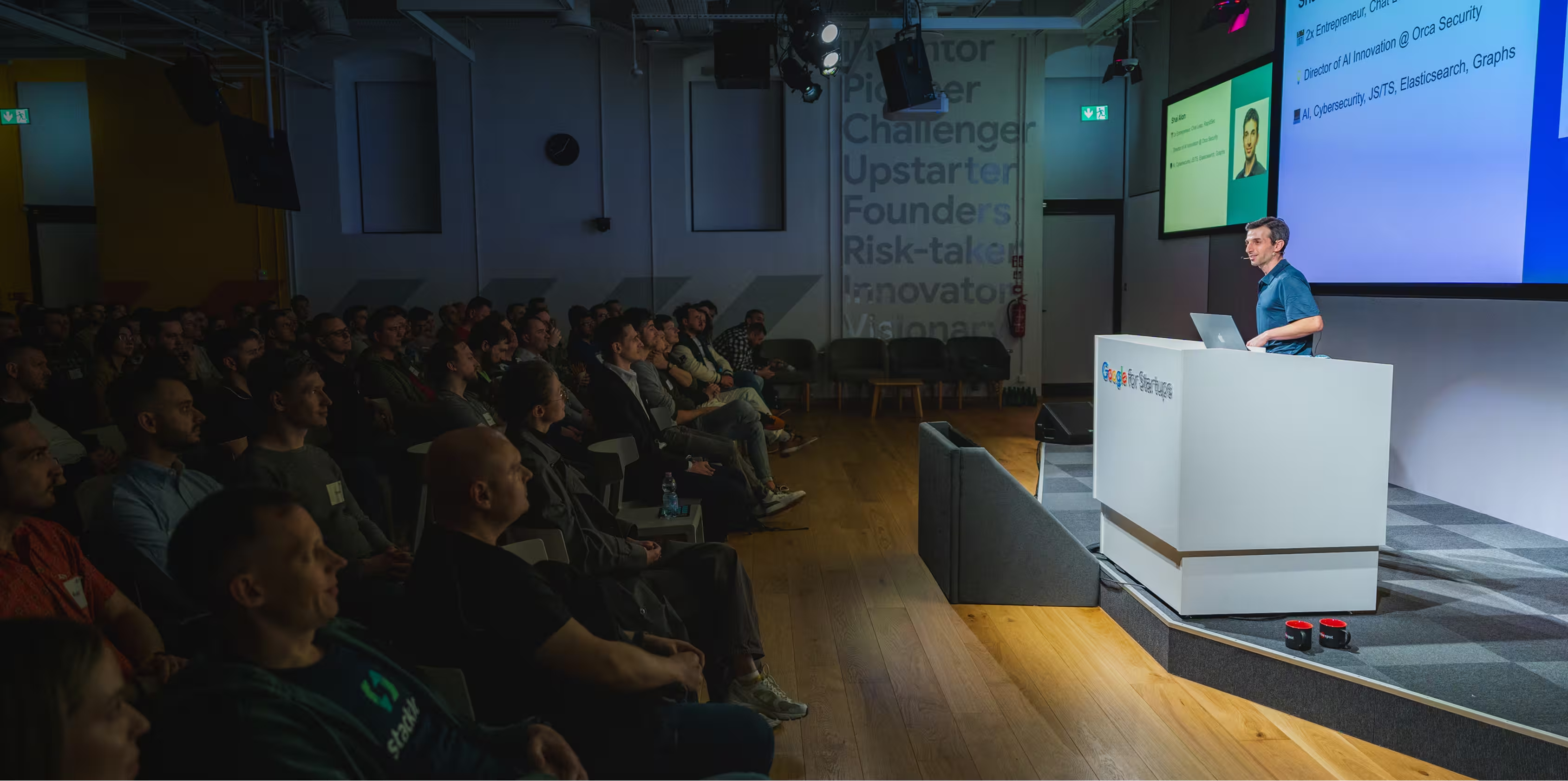
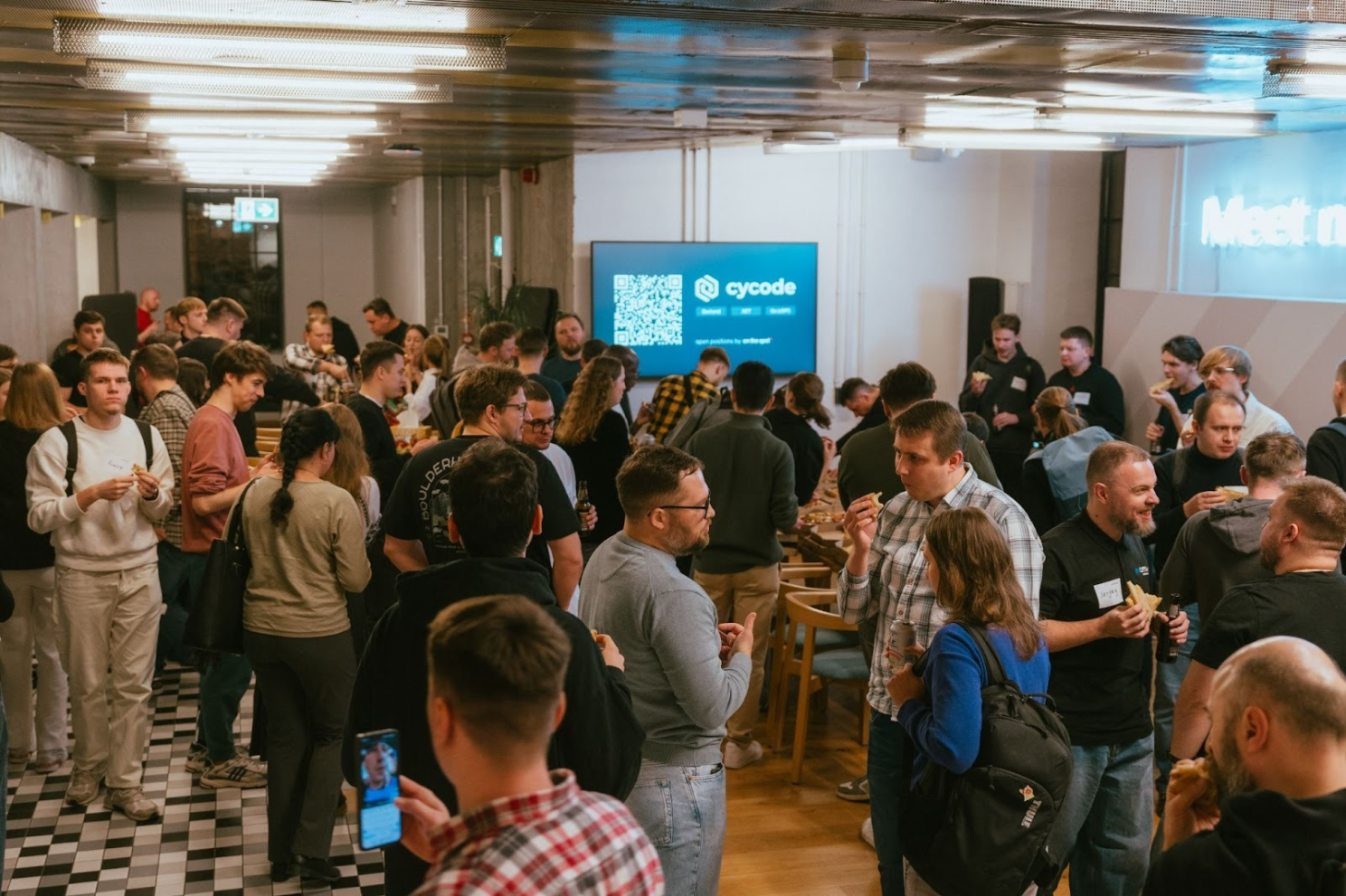
- Run TechSpot events for 100+ engineers. Sure, lots of companies sponsor tech events, that’s common practice. We do it too, give talks, network with the community, and feature open positions. But, on top of that, we organize our own events (which, without false modesty, are pretty good), and most importantly, we collect the attendees’ contacts so we can keep the right people engaged and in our orbit.
- Publish PR pieces in local media to build brand recognition and trust in R&D.
- Create thought-leadership content on our blog and actively promote it to highlight the R&D team, their expertise, and product.
By the way, we recently analyzed all 11 recruitment channels we use, their actual costs, performance, and how they stack up against ChatGPT’s hiring benchmarks. If you’re curious which channels perform best (and which ones don’t), feel free to take a look.
Hiring timelines and a 10-Day case study
Sometimes it goes much faster. A stealth-mode startup building its R&D team from scratch needed a Senior Data Analyst with 4+ years of experience. Knowing one approach wouldn’t cut it, we ran a full-spectrum recruiting campaign:
- LinkedIn outreach to 111 candidates
- Posts in local tech communities with a combined reach of 22,000+ professionals
- LinkedIn posts by our recruiters and colleagues, reaching 4,400+ people
- Our referral program, which produced one recommendation.
In this case, the time-to-hire was a record‑breaking 10 days, and the hire came directly from our LinkedIn outreach. But, as we mentioned earlier, such a fast hire is more the exception than the rule.
The kinds of roles we work with
We hire for both dev and non-dev roles across all seniority levels, from junior to director level, in the following domains:
- Engineering & Development
- Design & UX
- Product & Data
- QA & AQA
- Sales & Marketing
- Technical Leadership & Management
And here are a few hard-to-fill roles we’ve successfully closed (yes, the tricky ones too):
- Security Researchers
- eBPF Specialists
- Linux & Kernel Engineers
- GRC Experts
- Game Engine Developers
Most of our searches are for a few core stacks. If you already know yours, see how we hire React developers, hire .NET developers and hire AI developers in Poland.
Individual hires or full organic teams
We offer flexible engagement models to match your needs. Whether you need to recruit a single specialist or build an entire organic team from scratch, we have the expertise to deliver both.
For example, we’ve helped build and grow engineering teams like:
- Orca Security (55+ engineers)
- Unity (30+ roles filled)
- Cycode (20+ team members)

Recruitment-only customers see the same process. Max German, Engineering Manager at Vetric, wrote in his Clutch review:
I'm impressed by the detailed interviews about candidates, especially the videos On The Spot Development sends, which give us the chance to see the candidates' soft skills and communication even before interviewing them.
Frequently asked questions
How long does it take to hire a developer in Poland?
It depends on the role and the route. With an active search, first candidates usually arrive within days. The longer part is interviews and the notice period: under the Polish Labour Code, an engineer on an employment contract may need to give up to three months' notice. Plan the start date around that, not around the first interview.
How much does it cost to hire a developer in Poland?
According to the Bulldogjob IT Community Survey 2025, senior developers earned on average 12,516 PLN net per month on an employment contract and 25,467 PLN net on B2B. Your total cost adds employer contributions or the B2B invoice difference, plus the fee of whichever hiring route you use.
Do I need a Polish company to hire developers in Poland?
No. You need a Polish entity only if you want to employ people directly. An employer of record, B2B contracts or a dedicated team partner all let you work with developers in Poland without registering a company. The trade-off is how much of the hiring and admin stays with you.
What is the difference between B2B and an employment contract in Poland?
On an employment contract, the employer pays social contributions and the developer gets statutory paid leave, sick pay and notice protection. On B2B, the developer runs their own business, invoices monthly and pays their own tax and contributions. Many Polish developers accept either, and some prefer B2B for the higher net income.
Can a US company hire developers in Poland?
Yes. US companies typically use an employer of record, B2B contracts or a dedicated team partner, since none of these requires a Polish entity. Warsaw's working day overlaps with the US East Coast morning, which is enough for daily standups and planning. Contracts, IP and data handling follow EU rules.
Which developer roles are hardest to hire in Poland?
In our experience, the hardest are narrow specialists: security researchers, eBPF specialists, Linux and kernel engineers, GRC experts and game engine developers. They rarely respond to job postings, so these searches rely on direct outreach, referrals and meeting candidates at technical events.
Planning to grow your team?
If you want to hire developers in Poland without opening a local entity, we can help in two ways. Our tech recruitment services find and vet candidates you employ yourself. A dedicated development team gives you engineers who work only on your product, with recruitment, payroll and the office handled by us.
We’ve spent years working in the local market and are happy to share our experience and help you with hiring. Feel free to reach out if you’d like to learn more.


Stay in tune
with On The Spot
You've successfully signed up for our newsletter. Keep an eye on your inbox.
Read more
Discover what else is happening at On The Spot

TechSpot
Tech events in Poland and online for everyone interested in software architecture and systems design. Like-minded people, top experts from leading companies, and a big engineering community.
%201%402x.svg)
%201.svg)

137 Podcast
Conversations with top engineers, CTOs, and founders about day-to-day engineering and everything that excites us about tech.


.svg)