.png)


.svg)


Return to office is the new normal. Flexibility is still the hiring advantage
How hybrid became the default and shifted the balance between employers and employees. 2025 survey insights.
.svg)

In 2025, return‑to‑office (RTO) policies spread across Big Tech and large enterprises, and many headlines framed it as “the end of remote work.”
In early 2026, it looks less like a debate and more like a new norm. Hybrid with mandatory office days has quietly become the default format for many teams.
The market has moved into a phase where employers set the rules and employees adapt, often accepting less favored work models.
The question is what this new reality means for productivity, hiring, and retention in teams.
Employer preferences: 2024 vs 2025 vs early 2026
In 2024, about one‑third of IT specialists in Poland worked entirely remotely, while roughly 42 % [1] were in hybrid setups.
According to our internal data, most of the roles we handled that year were still flexible or remote‑friendly, with only a few customers explicitly requesting hybrid. By the end of 2024, however, more than 40 % of open positions were hybrid.
In 2025, this number fluctuated between 50% and 60%, depending on the quarter and the market. Most of these roles were hybrid with mandatory office days.
By early 2026, roughly 70% of the vacancies we handle now are hybrid. Fully remote positions still exist, but their share has noticeably decreased compared to previous years. On the other hand, if we look at the share of our current customers who have at least one team working in a hybrid format, it is around 54% – noticeably lower than the share of hybrid vacancies.
This creates a structural mismatch: new hiring demand is increasingly hybrid‑first, while many existing teams and a large share of candidates are still used to more flexible models. On paper, it might look like a clear shift towards RTO. In practice, we see a growing gap between what employers are standardising on and how people say they do their best work.
Even though employers have the upper hand now, competition for strong candidates is still intense. When a role offers a meaningful degree of flexibility in the work format, we see an immediate impact on shortlist quality and on how often people say yes to offers.
— Yana Tsiareshchanka, Recruitment Lead, On The Spot
What our local survey revealed about work model preferences
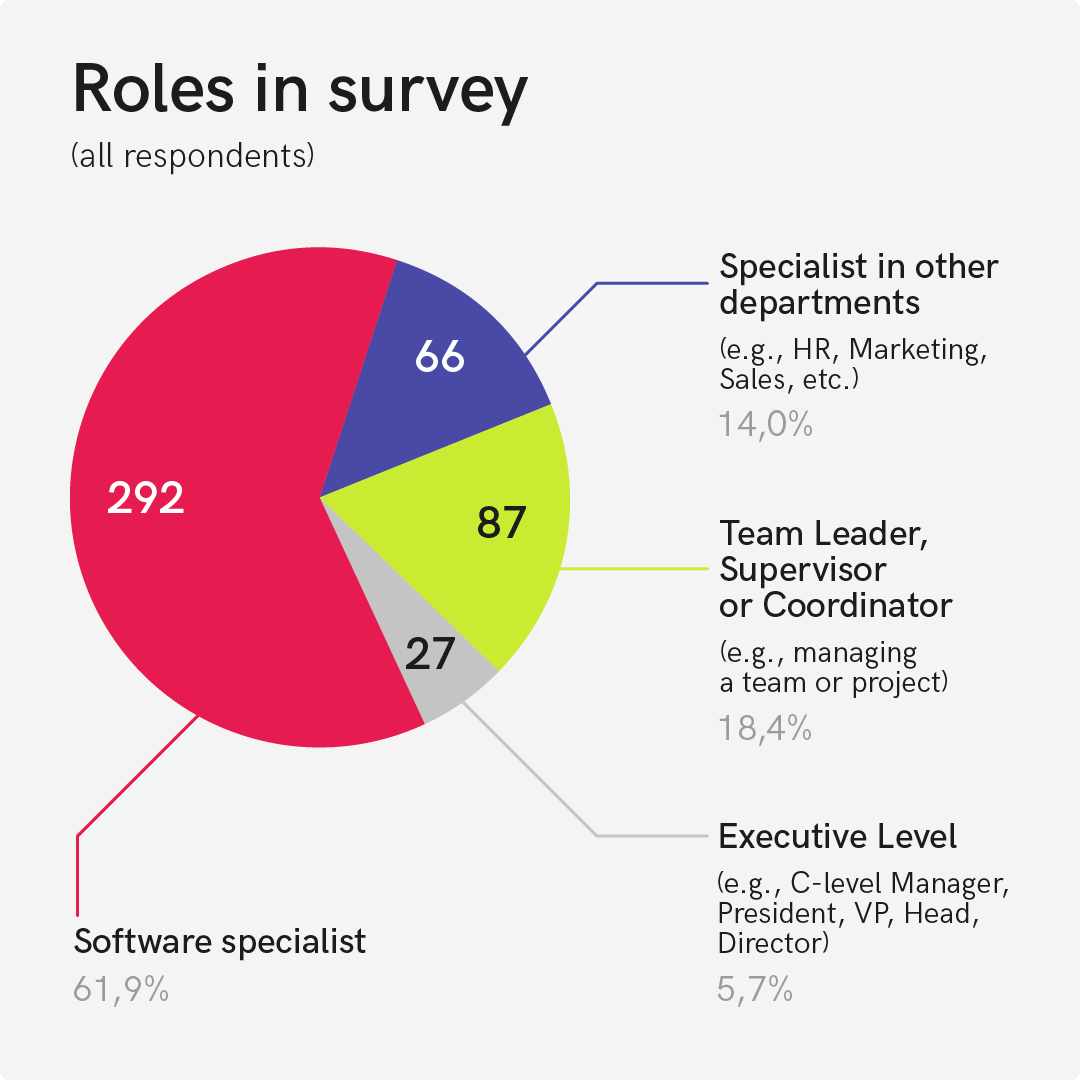
In early 2025, we ran a survey on the local tech market in Poland to understand how people felt about different work models. We collected responses from 471 professionals and asked them to rate their own productivity, their team’s productivity, and meeting effectiveness in each one.
Respondents evaluated four work arrangements: fully remote, remote with optional office access, hybrid with mandatory office days, and office-only.
Who we surveyed
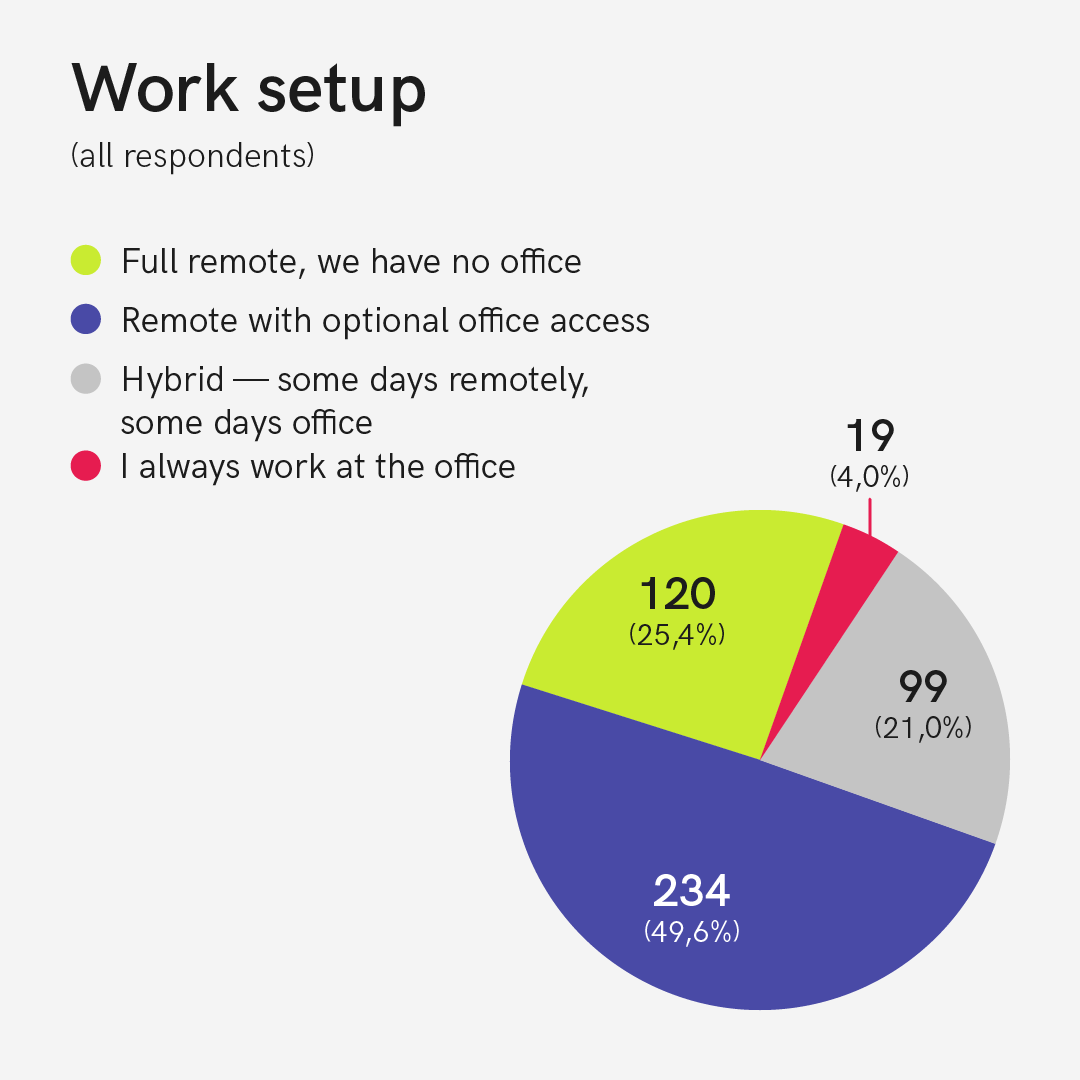
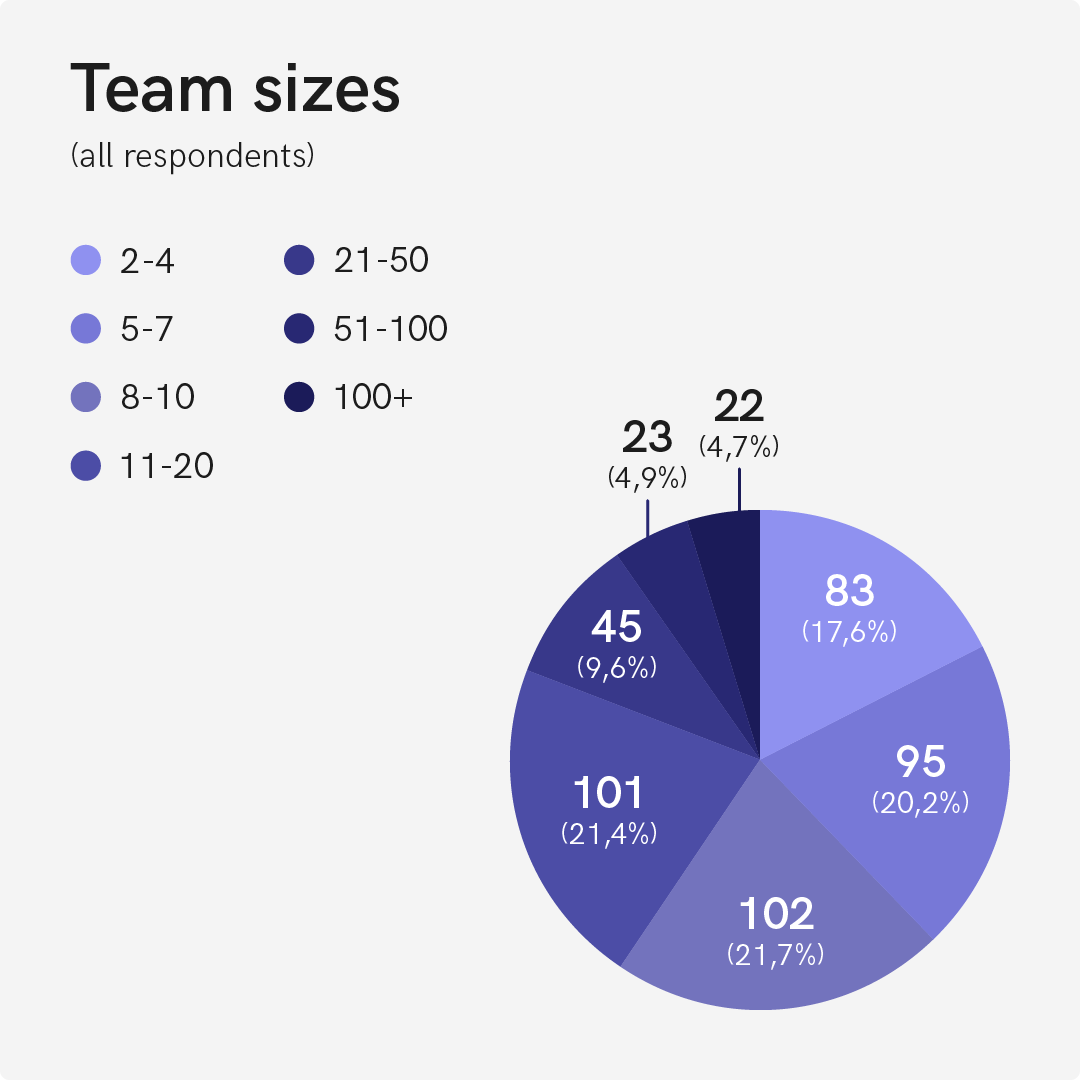
We surveyed engineers, team leaders, C-level, and specialists in HR, marketing, and sales. About 80% of respondents worked in small teams of 2–20 people, while the rest belong to larger teams.
When it comes to their work setup, most worked remotely with optional office access.
[slider-blog]
Main insights from the survey
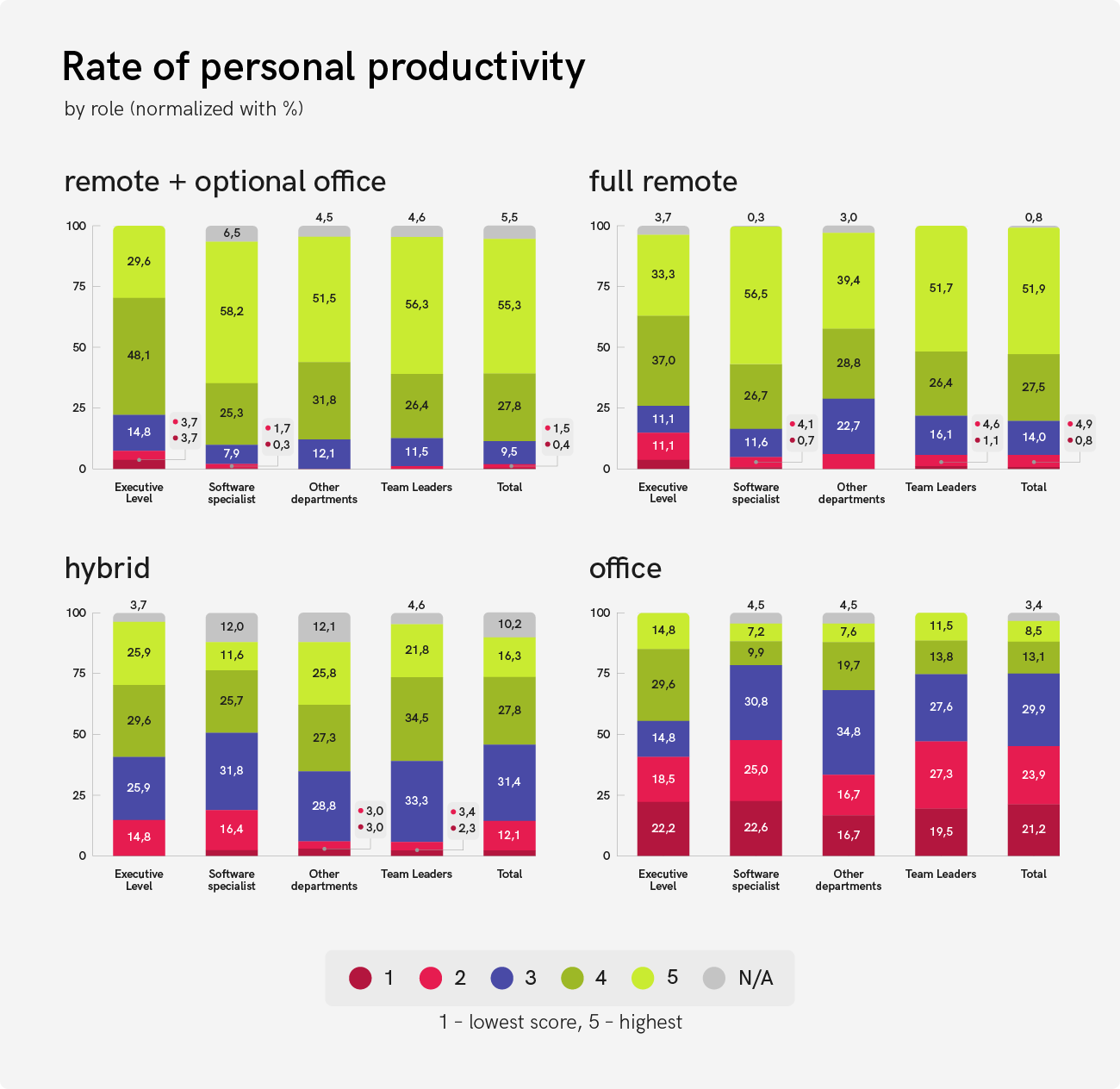
Across roles, people said they felt personally most productive in flexible setups like remote with optional office access and full remote. Office‑only and hybrid trailed behind.
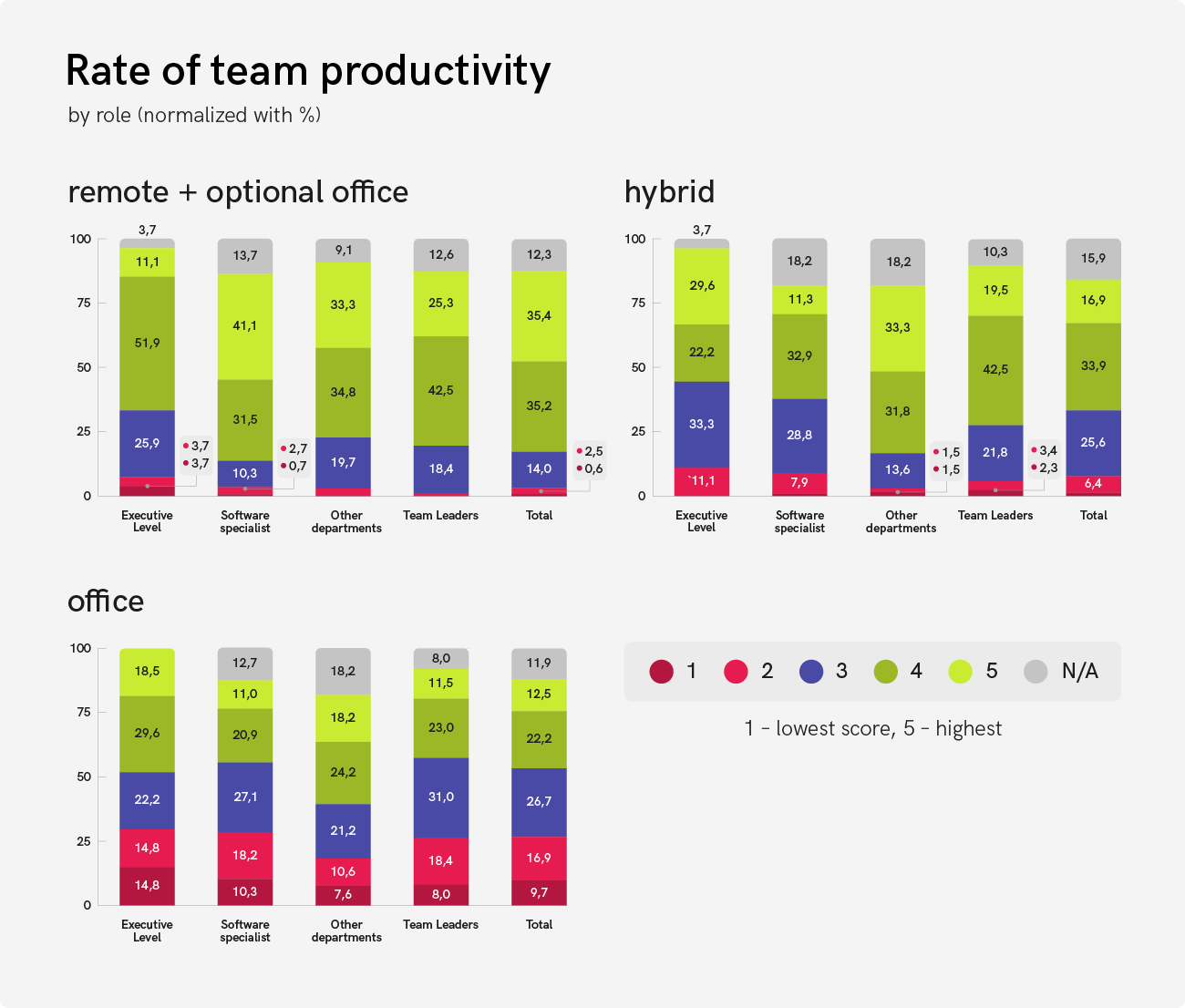
People rated their team productivity the same way: highest in flexible models and lowest in office-only environments.
Executives were the most likely to say in-office meetings are more effective. Most individual contributors said the format matters less than whether the meeting is well-run.
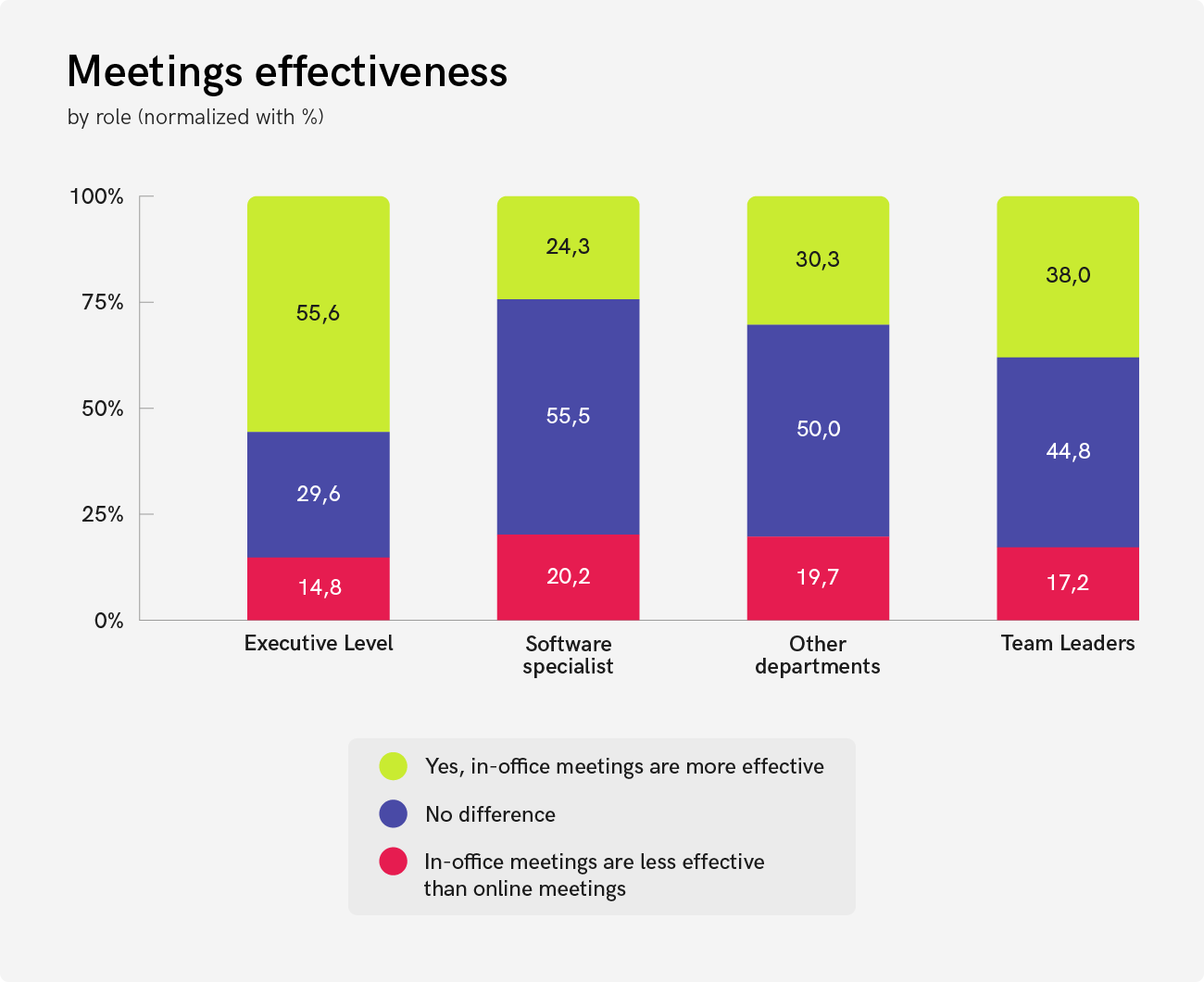
The results showed how people felt about work models in early 2025. And it seems people still feel more or less the same way in 2026, at least for now.
What changed is the market around them. In 2026, most open roles are now hybrid, so people’s preferences and the options they see don’t always match. And that gap might explain some of the hiring and retention challenges we’re seeing today.
How RTO plays out for strong brands vs unknown teams
There’s another layer that’s easy to miss if we only look at percentages: which companies are actually trying to sell RTO.
For large, well‑known companies, stricter hybrid models are easier to justify. They come bundled with other anchors: stability, higher compensation, prestige, clearer career paths. When someone joins a big‑name company, mandatory office days often feel like part of the package.
For startups and less recognizable logos, flexibility has historically been one of the strongest advantages in both hiring and retention.
When these companies copy a rigid hybrid model, they often give up that advantage without gaining the brand power that makes the trade‑off feel worth it. Saying “yes” to three office days for a FAANG‑level name is one thing; making the same trade‑off for a logo nobody recognises is a very different decision.
That’s why, for smaller teams, RTO becomes a strategic bet. If companies take away flexibility and don’t compensate with brand or real growth upside, they are very likely building teams that will stay only until a more flexible or more famous option appears. In other words, the same RTO policy that a strong brand can absorb fairly safely can turn into a long‑term retention risk for companies that used to compete on flexibility.
Key takeaways for scaling teams in 2026
- RTO has moved beyond a trend and become the new normal. Office and hybrid setups are now the default reality for many teams, and most people have either already adjusted to this model or are in the process of adapting.
- The market currently favours employers, but preferences remain. Companies can insist on hybrid and still close roles, yet our survey and public industry data show that around 80% [2] of specialists in the Polish market continue to prefer flexible work setups.
- Hiring is still challenging, but many employees are adapting to stricter work models, accepting hybrid roles even when they would personally choose more flexibility. This adaptation doesn’t mean their preferences have disappeared. It simply shows where they are willing to compromise to stay in interesting roles.
- The gap between what people want and what they accept is widening. In 2025, more than 50% of roles we filled were hybrid and the rest remote; by early 2026, about 70% of our open positions are hybrid, even though most respondents say they feel most productive in flexible arrangements.
- RTO is a positioning choice. For strong, well‑known companies, stricter hybrid policies usually work because brand, pay, and stability soften the loss of flexibility. For startups or lesser‑known teams, the same move often cuts away their main advantage without adding anything comparable, and that’s exactly where long‑term retention trouble tends to start.
- Flexible setups remain popular for a reason. People value time for deep work, fewer distractions, and less time lost to commuting or meetings that don’t add much. And as the balance of power shifts back toward employers, it feels like the task for them is to figure out how to keep the perks people got used to while bringing teams back together in the office.
At On The Spot, we build R&D teams in Poland in different work setups depending on what makes sense for your product, team, and culture. If hiring is on your agenda for 2026, feel free to reach out and start a conversation with us.


Stay in tune
with On The Spot
You've successfully signed up for our newsletter. Keep an eye on your inbox.
Read more
Discover what else is happening at On The Spot

TechSpot
Tech events in Poland and online for everyone interested in software architecture and systems design. Like-minded people, top experts from leading companies, and a big engineering community.
%201%402x.svg)
%201.svg)

137 Podcast
Conversations with top engineers, CTOs, and founders about day-to-day engineering and everything that excites us about tech.


.svg)