Agenda
Doors open
Registration, drinks & snacks
Talk: AI-native architecture
Software engineering today requires AI-native architectural practices: evolvable contexts, structured collaboration between humans and AI agents, and governance that keeps systems reliable as they learn and change.
This session explores what happens to engineering systems when AI becomes part of the architecture itself.
We’ll look at what could be a natural next step: AI-native architecture as an engineering capability.

Ivan Padabed
Cloud Platform Architect
Coffee break
Catered food, drinks, networking
Talk: AI agents as operating systems
Modern agents increasingly resemble operating systems in how they coordinate context, tools, memory, and constraints.
Using a real production agent as an example, this session explores:
• structural parallels to operating systems
• what’s genuinely new (self-evolution, identity persistence, embedded ethical boundaries)
• how to reason about agents as infrastructure rather than features
A practical framework for teams building agentic systems beyond prototypes.

Roman Voronin
AI Operations Architect
Coffee break
Catered food, drinks, networking
Roundtables: System-level AI adoption
Six practitioners will share short inputs, which will be followed by small-group discussions where participants exchange experience and compare approaches.
1. Organic AI adoption: lessons from vibecoding
AI adoption doesn’t always come from top-down initiatives, it might grow organically through experimentation. Based on internal vibecoding sessions, Andrei will share what actually stuck and what failed.
👉 What patterns of AI usage have naturally emerged in your team?
2. Knowledge debt in AI-native systems
When agents generate a growing share of code, teams may lose the ability to understand and explain their own systems.
👉 Should we treat this knowledge debt as a critical risk to manage, or accept it as a black box and compensate with stronger testing?
3. Ownership in AI-assisted engineering
As AI takes over execution, the ownership problem becomes more explicit. The focus shifts from who builds to who makes decisions and is accountable for outcomes.
👉 How should ownership and accountability be redefined in AI-assisted teams?
4. AI as a structural stress test
Code generation became cheap, so the main bottleneck now is decision-making. Unclear priorities, fragmented context, and slow decisions are exposed under speed.
👉 Can your current decision-making model operate effectively in a world of fast and cheap execution?
5. Aligning leadership and engineering in AI adoption
Executives see AI as a magic wand, while engineers see slop-generating crap. Both perspectives are valid, but this tension stalls adoption.
👉 How do you align expectations and operate effectively if you’re the tech manager caught in the middle?
6. Centralizing AI adoption in skills, workflows, and reasoning
The first step in AI adoption was teaching developers how to use new tools. The next step is more structural: centralizing AI-related skills, embedding AI into workflows, and making reasoning itself part of the process.
👉 How do you turn AI usage from an individual habit into a system-level capability?
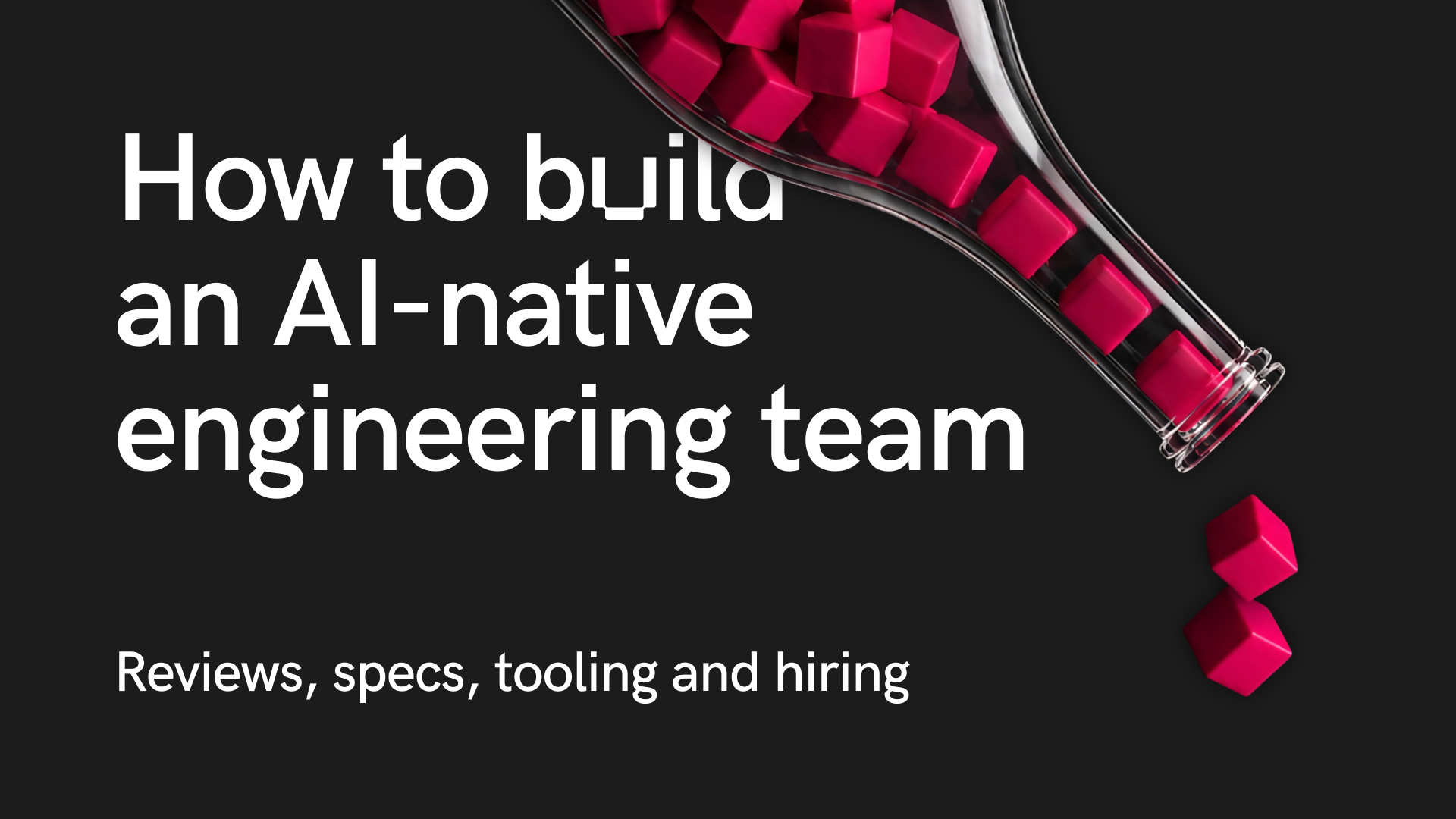
Andrei Lapanik, Egor Miasnikov, Evgeny Demidovich, Dmitry Volokh, Vadzim Zhuk, Aleksey Shafransky
Networking & afterparty
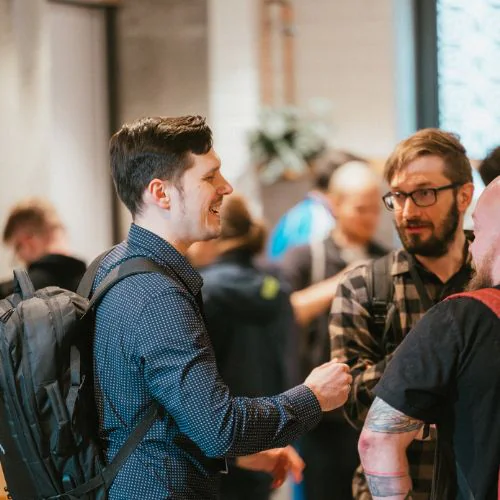
More time to connect over food and drinks.
Talk to peers and get more clarity on how to design AI-native systems, how to adopt it in organizations, and learn how others are doing it.
Video highlights
Speakers & guests
Registration
Sign up below, and we’ll email you the confirmation along with all the join links so you don’t miss a thing
Brain Embassy Czackiego
9 April 2026, 16:00 - 21:00
Registration is closed. Join the waiting list.
If any spot becomes available, we’ll contact you asap! Otherwise, join us online.
Brain Embassy Czackiego
9 April 2026, 16:00 - 21:00
+44 759 092 7942
Thanks for registering! We’ll send you a confirmation email soon with all the event details and helpful links.


.png)