
.svg)


What is an offshore development center: a complete guide
An offshore development center in Poland: full ownership, up to 50% lower cost, and buyout right
.svg)
Companies looking to scale engineering capacity often land on one of two extremes: hire in-house or hand the work to an outsourcing vendor. An offshore development center (ODC) is the middle path: a dedicated engineering team built by a tech partner, where the customer keeps full ownership of the team itself.
.png)

Establishing an Offshore Development Center has become the go-to strategy for scaling engineering team in talent-rich regions, and typically at a much lower cost.
In this article, we’ll explain
- what an offshore development center is,
- why companies choose this model,
- and how it compares to other approaches.
What is offshore development center?
An offshore development center, or ODC, is an engineering unit – recruited, employed, and supported by a local partner abroad, but run entirely on a customer's own roadmap, tools, and processes.
It's your team. It reports into your product organization, and is simply employed and supported through a partner like On The Spot Development.
The partner’s role is to provide the full operational foundation:
- recruiting engineers,
- handling employment and payroll,
- managing local compliance,
- providing office infrastructure or remote work setup.
The customer keeps everything that actually builds the product: architecture calls, sprint priorities, who gets promoted, what ships next.
Many providers structure this as a build-operate-transfer (BOT) arrangement: the team transfers to you in phases, often with transfer fees attached. At On The Spot Development, we build every ODC contract around a buyout right instead: the customer can bring the team in-house at any moment, from day one. It's a small structural detail, but it's the difference between "dedicated team" as a marketing phrase and a dedicated team you can actually walk away with.
"The team is fully yours" principle works across most ODC setups. Where it actually gets tested is in the contract, specifically, what happens if you decide to walk away.
6 key benefits of an offshore development center
Cost is usually the reason a company starts looking into an ODC. However, the bigger draw is what a stable, dedicated team gives you over time: deeper access to talent, less operational overhead, and a team that is 100% focused on your product.
That said, first things first.
1. Strategic cost optimization
By establishing an offshore development center, companies significantly reduce the cost of operating an engineering organization. Our customer Cycode, reviewing the partnership publicly, put the effect at an estimated 30-50% reduction in employment costs. Some of that comes from lower office rent, taxes, and infrastructure, but the biggest lever by far is the one that drives most R&D budgets: engineering talent itself.
For example, recent research on median monthly compensation across senior roles in July 2026:
Poland also offers a relatively competitive tax environment. The standard corporate income tax rate is 19%, while qualifying small and newly established businesses may benefit from a reduced 9% rate. The country provides generous R&D incentives, including an additional deduction of up to 200% of eligible payroll costs.
These tax advantages are further reinforced by lower real estate costs.
Sum it all up, and you get a notable reduction in overall spend, without giving up ownership of the product, the process, or the roadmap.
2. Access to an extensive talent pool
Countries with mature technology ecosystems provide an attractive alternative when competition for developers becomes too intense in local hiring markets.
For example, Poland's tech talent pool includes roughly 650,000 active professionals, covering everything from core stacks like Java, .NET, and Python to specialized fields such as AI/ML and cloud engineering, reinforced by a steady pipeline of STEM graduates – 57,000 annually.
At On The Spot Development, we strengthen that advantage with our own recruitment ecosystem. Our proprietary talent network includes 60,000+ tech specialists, 200+ community partnerships, and 6,000+ engaged email subscribers, enabling us to identify and engage qualified engineers quickly, even for niche or hard-to-fill positions.
3. End-to-end operational support
With an offshore development center, operational responsibilities – employment, legal compliance, office management, and local administration – stay with the local partner, which allows company to focus on engineering, product development, and business growth.
At On The Spot Development, we handle all of that, plus a fully equipped office in the center of Warsaw, hardware provisioning, employee benefits, immigration assistance, and team events.
We also help build your employer and product brand locally, through team photoshoots, media coverage and TechSpot events, where your engineering team shares expertise with an audience we curate around your active hiring needs
4. Fast engineering team setup
Building an ODC allows you to launch a fully operational team significantly faster than setting up a subsidiary abroad on your own. Company hands its technical and business requirements, and local partner takes care of the rest: sourcing, screening, and presenting the right engineers for your stack and team.
In our own practice, the first working milestone can come fast: for Orca Security, the initial product MVP shipped five months after the first two engineers joined.
For the specifics of hiring in Poland, we've covered how to hire developers in a separate blogpost, along with a full breakdown of hiring channels and their real costs.
5. Long-term knowledge retention
An ODC gives you a 100% dedicated team. Full-time, no other clients, no rotating bench. The people building your product today are the same ones still building it next year, and everything they've learned along the way stays with them. Why an architecture decision was made, what didn't work last time, which shortcuts are technical debt versus intentional trade-offs.
The knowledge stays in the team itself, and because it's the same people long-term, they're as invested in the product as any full-time employee would be.
6. Pricing model
Most ODC vendors work on the same formula: the engineer's actual salary, plus a fixed monthly management fee. What differs is the scope of services that fee covers. For some vendors, it's recruitment, payroll, compliance, and day-to-day support. For others, it also includes office space, benefits, and team events.
At On The Spot Development, the engineer's gross salary is 100% visible to the customer, and the management fee is fixed: recruiting, HR, payroll, legal, office, benefits, and hardware are inside it, with no hidden margin on top of salaries.
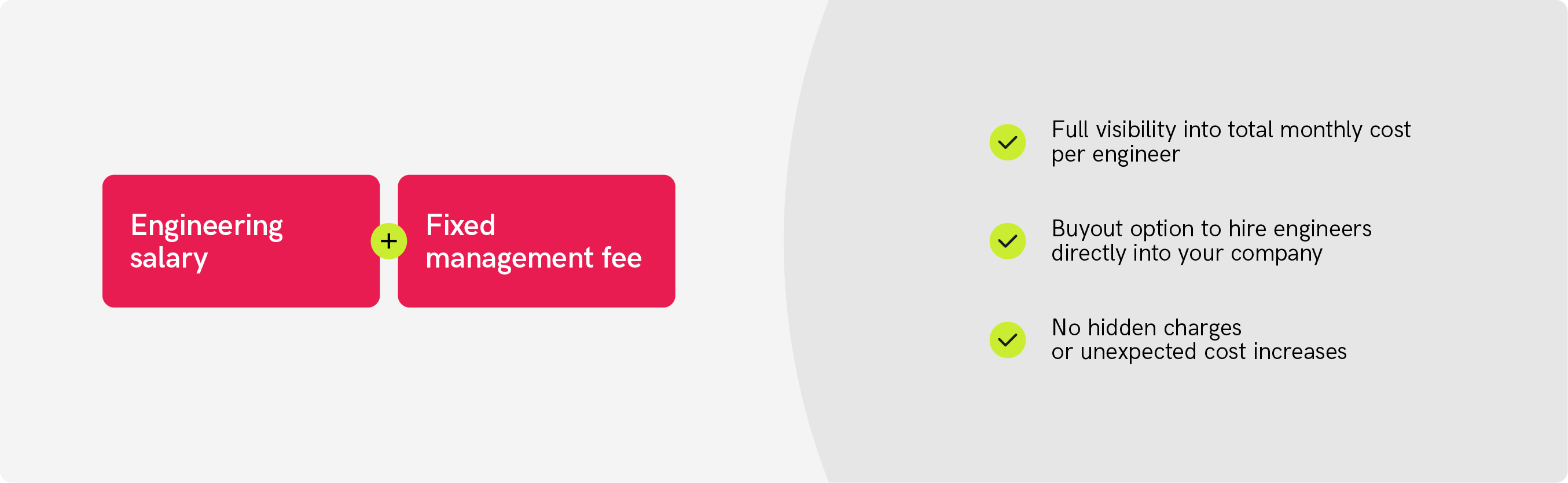
How an offshore development center works
The structure is straightforward: the customer owns the engineering function while the local partner provides the operational foundation needed to build and support the team:
- sourcing and recruiting developers
- handling employment contracts, payroll, and benefits
- providing local HR support
- arranging office space, equipment, or remote work infrastructure
- managing legal and compliance requirements
At On The Spot Development, we also support teams with day-to-day operational needs: accounting support, immigration and relocation assistance, employee benefits package.
Offshore development center vs. other delivery models
An offshore development center is sometimes compared with other ways of accessing engineering talent abroad. Although these models may look similar on the surface, they differ significantly in terms of structure, ownership, and long-term goals.
An ODC differs from other ways mainly in ownership.
- Project outsourcing hands a defined scope of work to a vendor who owns delivery.
- Staff augmentation fills gaps with individual contractors.
- A subsidiary gives full control but means setting up a legal entity from scratch.
- Tech recruitment only finds candidates, you handle everything after they're hired.
An ODC sits in between: a dedicated team, built and supported by a local partner, but fully owned and directed by you from day one.
Why Poland is a popular ODC location
Poland has become one of Europe’s leading destinations for offshore development centers thanks to the combination of a strong technology talent pool, EU regulatory alignment, convenient time zones, and a competitive cost structure.
- Poland produces over 57,000 STEM graduates a year, feeding a tech talent pool of roughly 650,000 active professionals.
- As an EU member state, Poland also gives you the same legal footing you'd expect from an in-house European team: full GDPR compliance, EU intellectual property protections, and enforceable contracts.
- CET timezone overlaps comfortably with both Western Europe and the US East Coast, plus English proficiency that consistently ranks in the world's top 15 (EF English Proficiency Index)
.png)
Choosing an ODC partner: what actually matters
Liza Makarevich, Chief Success Officer, covered this in her "Scaling Tech Teams" LinkedIn newsletter
Her central argument is that choosing an ODC partner should go far beyond comparing developer salaries, management fees and recruitment capabilities. These numbers matter, but they reveal little about how the partnership will work once the first employees have joined. Two providers may present similar proposals while offering fundamentally different levels of support, operational ownership and flexibility.
Recruitment is often where the partnership begins, but it quickly becomes only one part of the work. As the team grows, new challenges emerge: salary reviews, employee relocations, local compliance, policy changes, office expansion, due diligence, acquisitions and sudden changes in hiring plans. These situations rarely belong to a single function. They require recruitment, HR, finance, legal and operations to work together.
This is where the operating model behind the management fee becomes critical. A strong ODC partner does more than deliver individual services or respond to separate requests. It takes ownership of complex processes, coordinates the right people and absorbs much of the operational complexity on the customer’s behalf.
The quality of an ODC partner is reflected in how much operational complexity they quietly absorb on behalf of the customer.
If I were choosing an ODC partner today, I'd still compare salaries and management fees. But I would look far beyond the numbers. I would want to understand how that partner works once hiring is no longer the only priority, when teams grow and organisations change.
.png)
Case study of scaling from 2 to 55+ engineers with an ODC
Orca Security — a cybersecurity unicorn valued at $1.8 billion, built around its patented SideScanning™ technology for agentless cloud risk detection — came to us in 2019 through a referral from one of our co-founders. At the time, Orca was a small team looking for a partner to help build its cloud security platform and get it to market.
The brief was specific: build the frontend and integrations teams from scratch, and launch an R&D center in Poland to support product development. The first milestone came fast, as the initial dashboard MVP shipped in five months and won Orca its first paying customer.
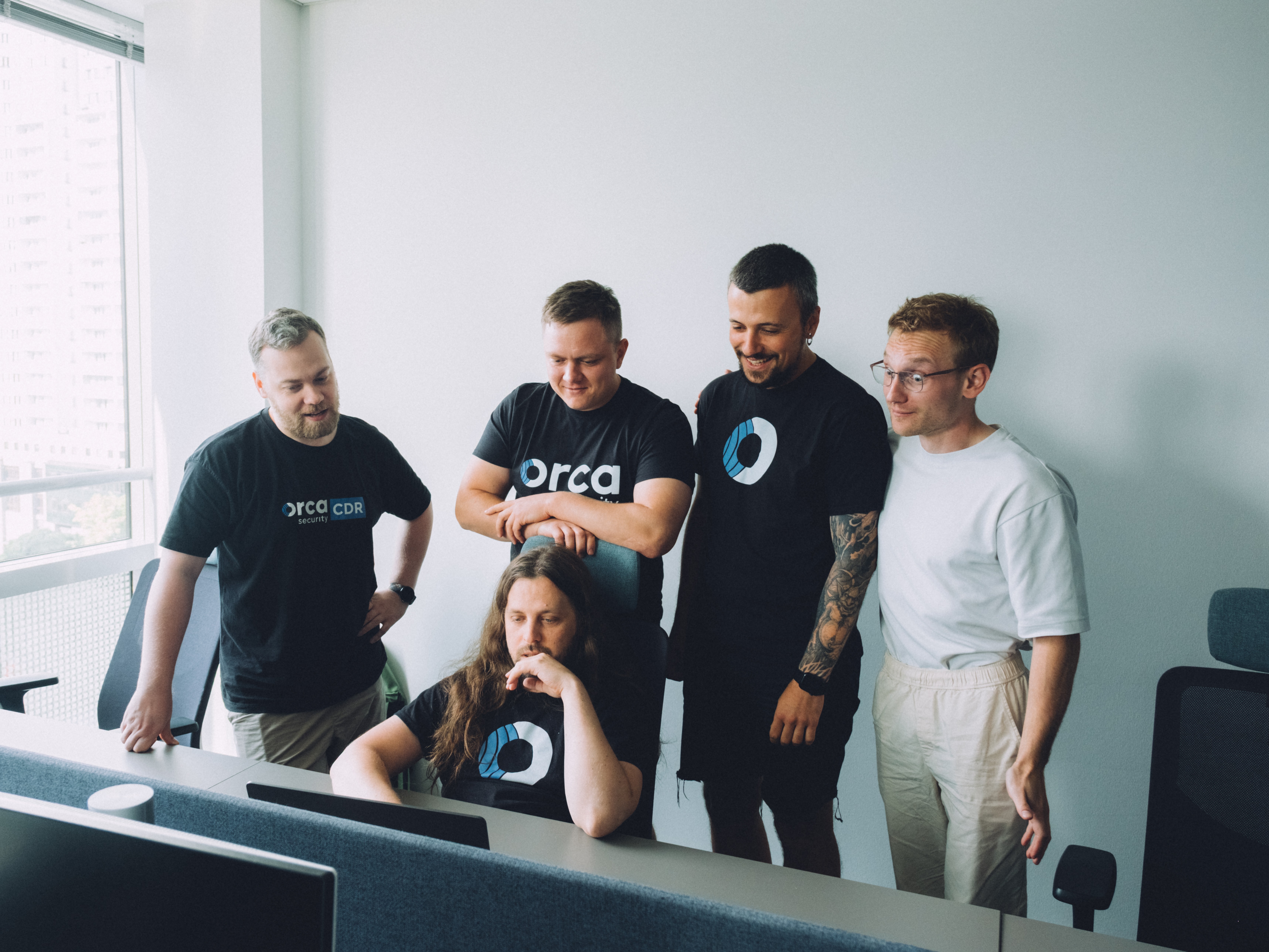
From there, the ODC grew alongside the product. What started as two engineers became a team of 55+ specialists over five years, spanning frontend, backend, DevOps, and QA. Hiring at that pace in a competitive market wasn't automatic — for some rare roles, our recruiters reviewed up to 600 profiles to fill a single position.
Beyond hiring, we took on the operational side entirely: office management, HR, payroll, legal support, day-to-day administration — so Orca's leadership could stay focused on the product, not on running a Polish entity.
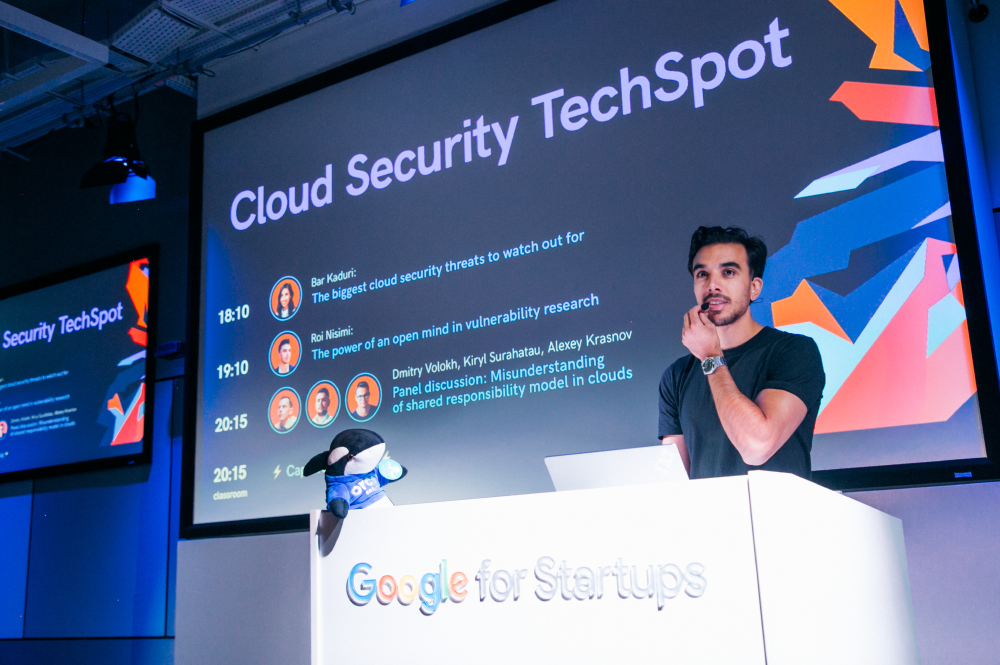
We have also helped strengthen Orca Security’s employer brand in Poland through our TechSpot events devoted to cloud security and CI/CD security, as well as media coverage and community engagement initiatives.
Looking back on the five-year partnership, Orca's former CPO summed up the impact directly:
Our collaboration with OTS has improved development efficiency by over 40%, reduced costs, and supported strong revenue growth. The team’s expansion from 2 developers in 2019 to over 55 today has been key to accelerating product delivery and scaling our impact.

Read the full Orca Security case study for the complete breakdown of the engagement.
FAQ: offshore development centers
What is an offshore development center (ODC)?
An offshore development center is a dedicated engineering team in another country, recruited and employed by a local partner but working exclusively on your product under your own roadmap, tools, and processes. It functions as an extension of your in-house team rather than an external vendor.
How is an ODC different from outsourcing?
Ownership. In project outsourcing, the vendor owns delivery of a defined scope. In an ODC, you own the team's direction, architecture, priorities, and processes, while the partner owns only the operational layer: employment, payroll, compliance, and office. The team works for you full-time, with no other clients.
How much does an offshore development center in Poland cost?
The standard model is the engineer's actual gross salary plus a fixed monthly management fee covering recruitment, HR, payroll, legal, office, and benefits. In our customer Cycode's public review, the overall effect was an estimated 30-50% reduction in employment costs compared to hiring equivalent roles in-house in their home market.
Who owns the team in an ODC?
The customer directs the team from day one. At On The Spot Development, contracts include a buyout right: you can bring the team in-house at any moment.
How long does it take to launch an ODC?
Significantly less than opening your own legal entity abroad. The partner starts sourcing against your requirements immediately, and the team then scales with your roadmap. In our Orca Security case, the first two engineers grew into a shipped product MVP within five months, and into a 55+ person R&D center over five years.
Build your ODC hub in Poland with us
An offshore development center works because it separates the two things founders actually care about: who's building the product, and who's dealing with contracts, payroll, and office leases in a country you've never operated in. You keep the first. A partner like On The Spot Development handles the second — and, with a buyout right built in from day one, you're never locked into that arrangement longer than it's useful to you.
Plus, On The Spot Development holds a 5.0 rating on Clutch and a 5.0 on Glassdoor (20 reviews, 100% recommend), so we know a thing or two about it
If you're considering an ODC in Poland feel free to reach out. We can walk through what a team built around your roadmap would actually look like.

Ready to build your R&D team in Poland?
We’ve received your request. One of our specialists will reach out to you within 24 hours to discuss your team structure.

Read more
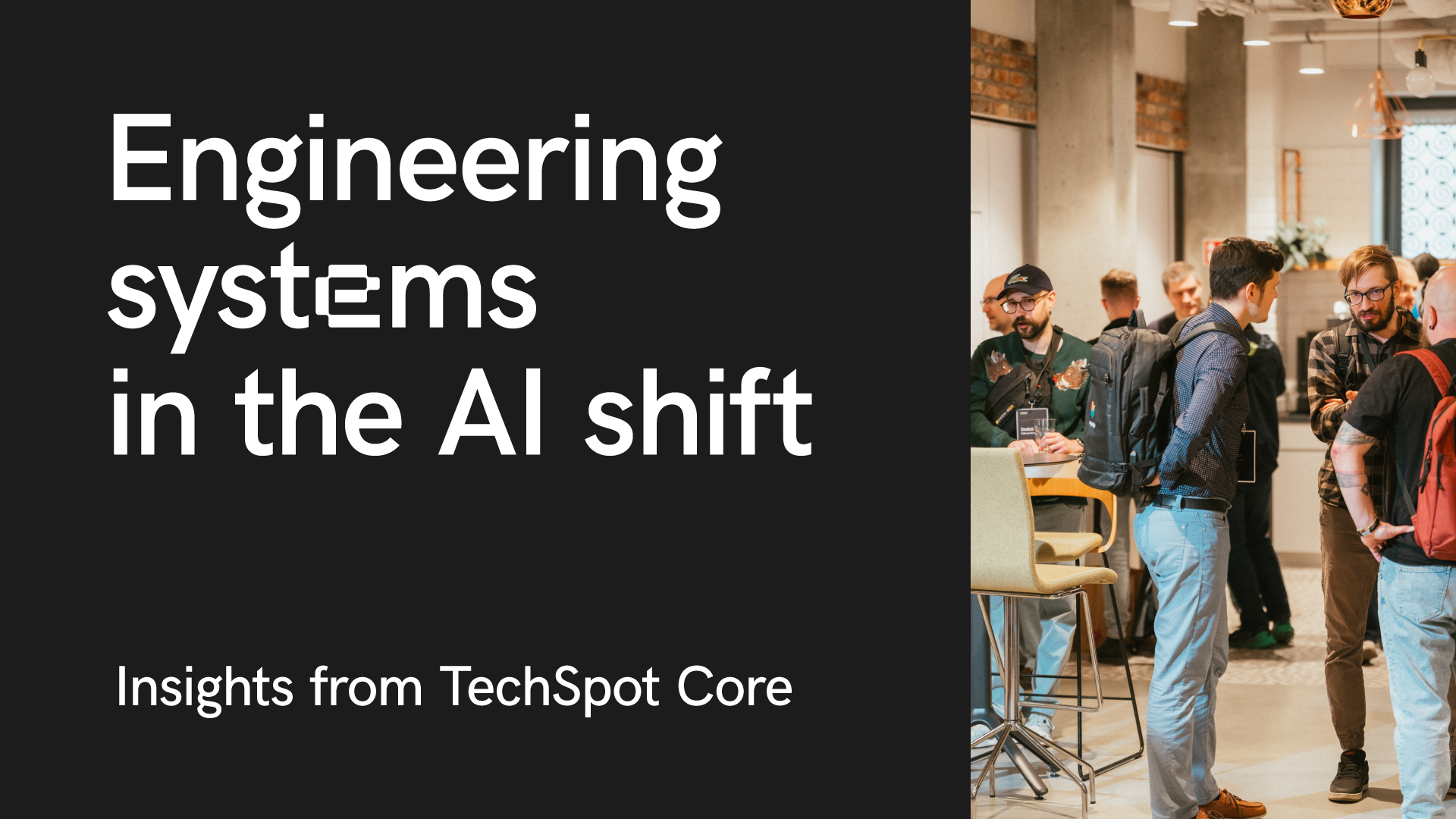

Discover what else is happening at On The Spot

TechSpot
Tech events in Poland and online for everyone interested in software architecture and systems design. Like-minded people, top experts from leading companies, and a big engineering community.
%201%402x.svg)
%201.svg)

137 Podcast
Conversations with top engineers, CTOs, and founders about day-to-day engineering and everything that excites us about tech.


.svg)


