.png)

.svg)








%201%402x.svg)
%201.svg)


.svg)


Offshore development center
A custom long-term R&D team in Warsaw that works only on your security product. We handle employment, payroll, HR and operations. You hold the roadmap.


Cybersecurity software development is the engineering of products that protect systems, applications, infrastructure and data. It pairs software engineering with cybersecurity domain depth to tackle problems that cross technologies and environments.
On The Spot Development builds teams across a broad range of cybersecurity domains: cloud and runtime security, application and software supply chain security (including code and CI/CD security), email and social engineering security, and AI and agentic security.
You limit your roadmap by hiring in expensive markets like the US, Israel, or the UK. In Poland, you get the same seniority for less, with total transparency into the salaries you pay.
Your cybersecurity local talent market is narrow, the search runs for months, and your product roadmap scales fast. Time to hire is the constraint.
You need to stay flexible on headcount. You want the ability to scale and restructure the team fast based on changing project demands.
You need highly specialized, hard-to-fill roles like kernel and eBPF development, detection engineering, low-level Rust, and pipeline security.


This collaboration has improved development efficiency by over 40%, reduced costs, and supported strong revenue growth. The team’s expansion from 2 developers in 2019 to over 55 today has been key to accelerating product delivery and scaling our impact.

Today approximately 30% of our R&D organisation is staffed through OTS in Poland.

.png)
Their blend of technical expertise, clear communication, and adaptability make them a highly reliable partner.


On The Spot Development has helped us reduce our costs by 2X and speed up our development. The team has delivered high-quality work.


We often hear that OTS is one of the best companies our team members have dealt with.


This collaboration has improved development efficiency by over 40%, reduced costs, and supported strong revenue growth. The team’s expansion from 2 developers in 2019 to over 55 today has been key to accelerating product delivery and scaling our impact.

Today approximately 30% of our R&D organisation is staffed through OTS in Poland.

.png)
Their blend of technical expertise, clear communication, and adaptability make them a highly reliable partner.


On The Spot Development has helped us reduce our costs by 2X and speed up our development. The team has delivered high-quality work.


We often hear that OTS is one of the best companies our team members have dealt with.
We source and prescreen technically, then present profiles. You run the technical round, or our CTO runs it on your behalf, to your criteria. The decision is fully yours.
Our customers enjoy complete roadmap flexibility. They restructure their teams as demands shift, with a contractually defined buyout right available from day one.
Each engineer works full time on one product. We don't rotate people between accounts or park them on a bench. The team works inside your process: your backlog, your standups, your code review.
The engineer's salary is open and our management fee is fixed on top of it. You always know which part of the invoice is the team and which part is us.
Employment, payroll, tax and legal administration, the office, hardware and licenses stay on our side. Our team lead club keeps the engineers growing, now around AI adoption, metrics and agent workflows. Your managers run engineering, not paperwork.
75 of our engineers work on security products, more than in any other domain we staff. Two of those Orca Security and Cycode. Kernel, eBPF and low-level Rust take months to hire. We have filled those roles, and we flag yours upfront.
We turn down engagements that are not the right fit. Here is how to know whether this is the right moment for your company.
Each engineer assigns their work product to On The Spot Development under Polish law as it's created. Your contract passes it straight to your company.
Every engineer signs a confidentiality agreement before getting access to your systems.
Every laptop has full-disk encryption and sits under central device management, so a lost device can be locked remotely. The Warsaw office opens with a badge only.
By default, engineers work on staging or anonymized data, and production data stays off their laptops. You grant access to your systems and revoke it at any time. When an engineer leaves, On The Spot Development closes every access on their last day.
Agents that live inside customer workloads and must not slow them down. eBPF for low-overhead observation, Linux and Windows internals, container and Kubernetes runtimes, serverless environments where traditional agents are difficult or impossible to deploy. The bar is reliability, performance, low overhead, and the security visibility the product promises. Go, C++, Rust.
Turning attacker behaviour into rules that fire on real activity and stay quiet otherwise: privilege escalation, container escape, living-off-the-land techniques, cloud reconnaissance. The hard part is keeping the false positive rate low enough to still read the alerts.
Static analysis engines, scanners built for monorepos, ephemeral environments, GitOps workflows and machine-generated code. Correlating findings from many tools into one prioritised view instead of a long queue. Rust and Go for the engines, TypeScript and React for the interfaces people actually work in.
Read-only access through cloud provider APIs to scan configuration for exposed ports, misconfigurations and workload snapshots, plus monitoring CI/CD systems for malicious code in the pipeline.
Multi-party computation, key custody, hardware security module integration. Memory-safe languages are the requirement. Rust, WebAssembly.
Building and scaling a 25‑person team in Poland for a VC-backed startup.
We pinpoint exactly which roles you need, which parts of the product to prioritize, and what threat models to address. You leave the call with a realistic timeline per role.
Real CVs with real salary numbers, selected from the market for your product.
Mark the profiles you like and we log you into our ATS. You move through the stages with us: CV review, technical prescreen for skills, English and motivation. You run the technical round, or our CTO or a technical expert runs it to your criteria.
We handle the offer, the Polish employment contract, IP assignment and equipment. You approve the level and the number; the paperwork is ours.
Your account manager stays close from the first weeks, when feedback is specific and anything worth correcting is cheap to fix, then scales the team as your roadmap changes. We already know your product and domain.
TechSpot is our own engineering event series in Warsaw, and cybersecurity is one of its standing tracks. Past sessions include eBPF observability, cloud security, and CI/CD pipeline security, with speakers ranging from university researchers to engineers at cybersecurity vendors and cloud providers.
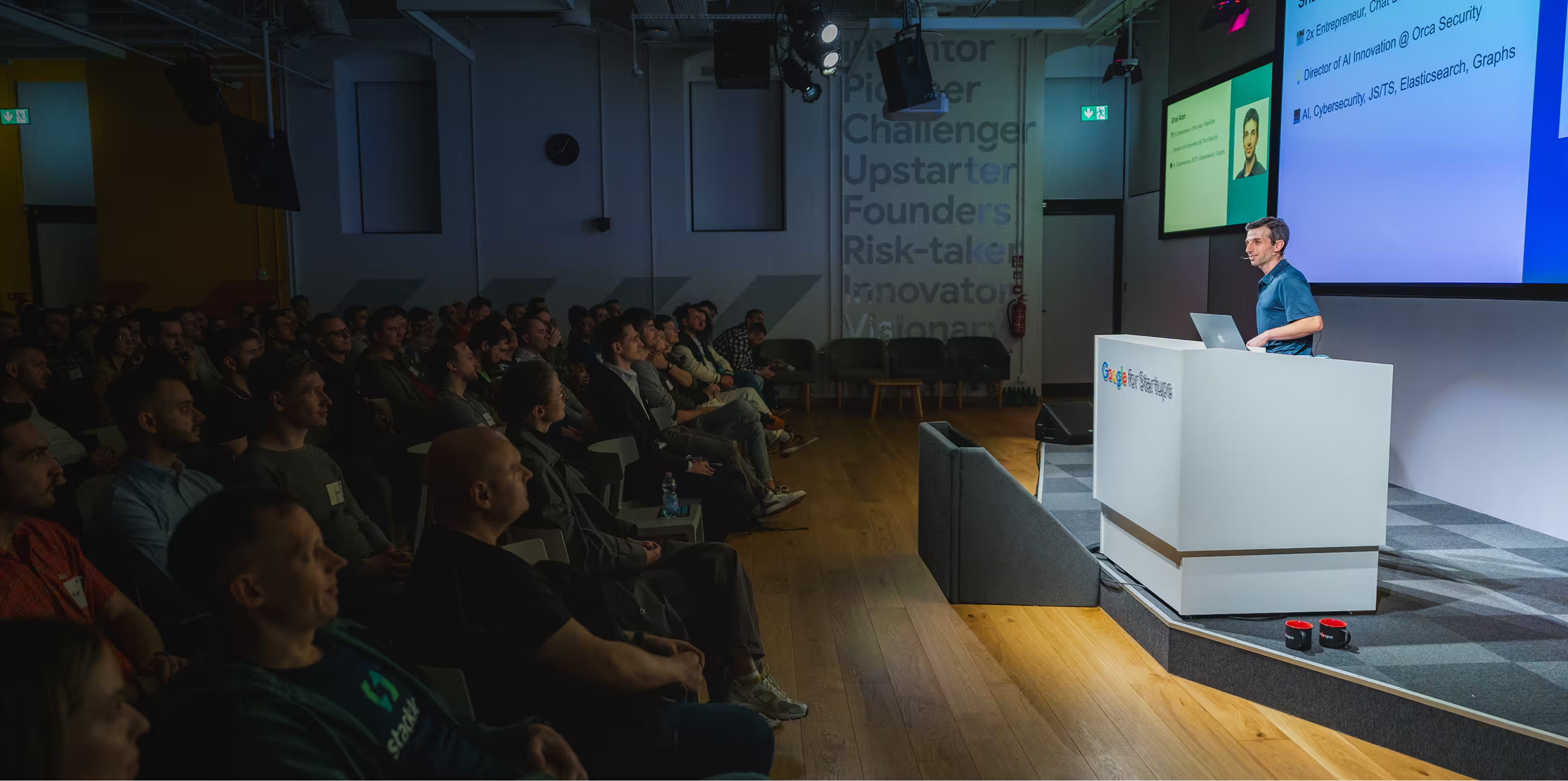
Niche engineers from cybersecurity products ignore standard recruiter spam - but they do come to our events. We host major tech meetups in Poland, helping us connect with rare experts directly and close your roles faster.

Every engineer signs an NDA and an IP assignment before they see anything of yours. The work product is yours, set out in the contract. Access is granted inside your own systems, under your access controls, and revoked by you when an engineer rolls off. We are the employer, you are the one who decides what they can reach.
Yes. We have successfully built and scaled engineering teams with deep eBPF and Linux kernel experience. Our specialized tech recruitment pipeline allows us to quickly source, vet, and onboard senior systems and low-level Rust engineers for cybersecurity products.
You do. We source, prescreen technically and present profiles, then you interview every candidate, or our CTO or a tech expert can run it to your criteria. Nobody joins your team without your decision, and you see the same information about each candidate that we do.
Hard-to-fill security roles take long, sometimes months, because the people who can do the work are already employed or not actively looking for a job. We give you the range for your specific role upfront.
Yes. Each engineer works full-time on one customer product.
Our engineers work inside the customer's own security processes: their onboarding, their access controls, their review requirements. Secure SDLC practice and OWASP guidance are the working default, and teams in Poland operate under GDPR.
Warsaw, Poland. Teams work from the office, remotely or in a hybrid pattern, whichever your engineering leadership prefers. Poland sits in CET, which gives a full working-day overlap with Israel and the UK and a partial one with the US East Coast.
Often not yet. If the product still changes shape every few weeks, or your stack gets rewritten monthly, a team in another country will spend its time waiting for direction. Senior technical leadership through our Fractional CTO engagement is usually the better first step.
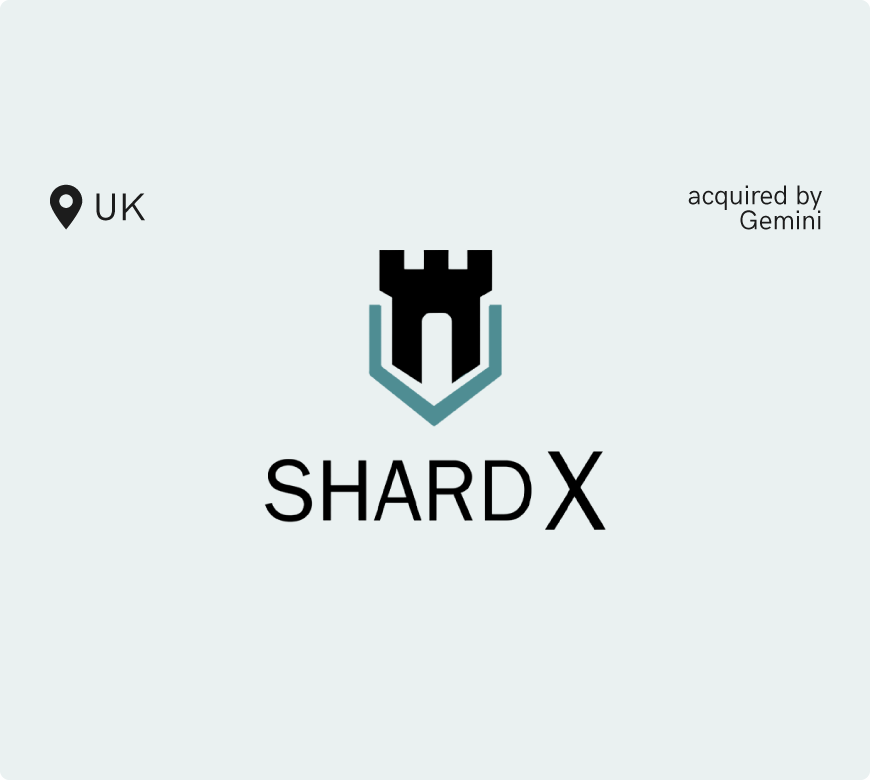
Yes. ShardX, a crypto custody startup we staffed from 2018, was acquired by Gemini in 2021 together with the whole engineering team we had built. Eight of our customers have been through an M&A.
Each model shifts the balance between control, speed, and cost. The custom software development page sets the models side by side, including where our own model is the wrong choice. Compare the models.
Tell us early. We are the employer, so the search starts again on our side and you are not paying twice for the same role. The reason usually surfaces in the first month, which is why we ask for feedback.
Send us the roles and the part of the product they will work on. We will come back with a timeline per role and what each one costs in Poland.
We've successfully received your request! Our specialists will contact you within 24 hours. For any urgent requests, please contact us directly at join@onthespotdev.com

A custom long-term R&D team in Warsaw that works only on your security product. We handle employment, payroll, HR and operations. You hold the roadmap.
Engineers hired into your own entity, prescreened technically before they reach you. You decide who runs the technical round: yourself, or our CTO or a tech expert runs it to your criteria.
Extra engineers on a defined piece of work: an integration, a migration, a QA push.
Senior technical leadership for early-stage security startups, from architecture and stack choice to the first hires.

Essential cookies keep the site working and cannot be turned off. Everything else is your choice, and you can change it at any time from the footer.
Full list of cookies, with providers and retention periods, is in our Cookie Policy.
Required for page loading, security, and form submissions. The site does not work without them.
Google Analytics 4 via Google Tag Manager. Shows us which pages people read and where they leave. Data is aggregated.
HubSpot and LinkedIn. Lets us see which campaigns bring visitors and show relevant ads. If this is off, we cannot tell where your visit came from.